Tuesday, 17 January 2017

Know your Puja - Abheeshta Sidhi Puja at Sree Varahamoorthy Temple,Panniyoor, Palakkad

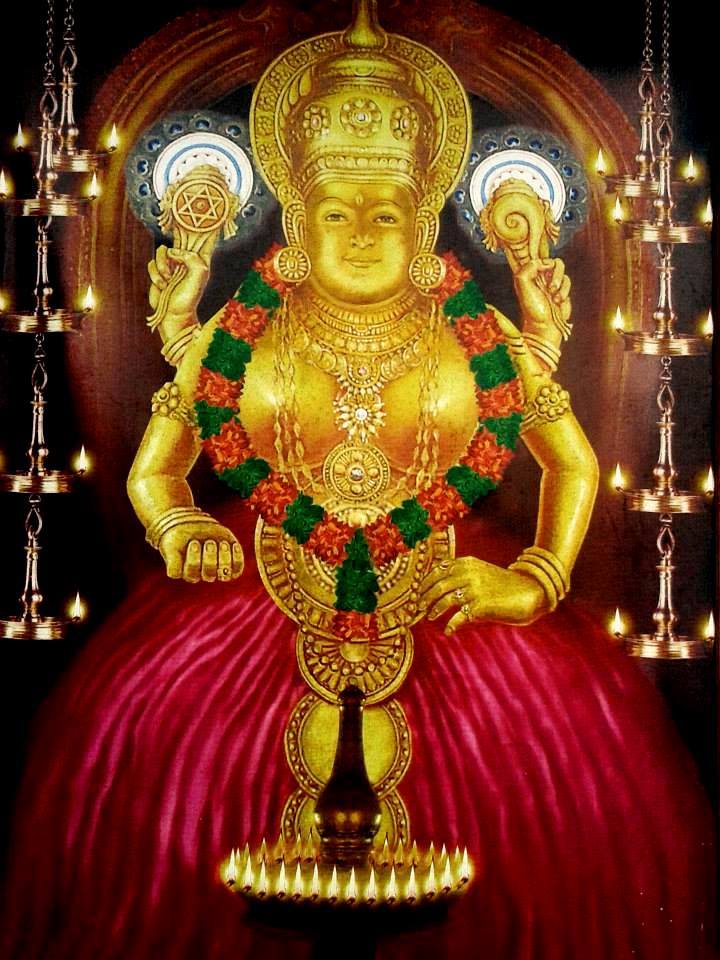
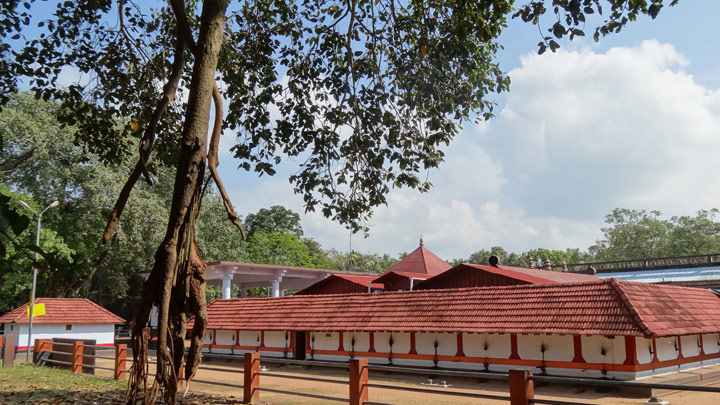
At Panniyur Sri Varaha Murthy Temple,one of the  most important puja offering to the Sri Varaha deity is the ‘Abheeshta Sidhdhi Puja’. 

This puja is  believed to pave way for ‘Abheeshta Karya Sidhdhi’or fulfilment of one's wishes.The Abheeshta sidhi puja has to be performed in the name of any dear or near ones whose  realisation of wishes we pray to come true, so it's not offered by devotee for himself/ herself. This puja is done on the chosen day at morning and evening. Devotees an collect the Payasa prasadam after the Puja or arrangement can be made to send it to their postal address, Devotees believe that when in peril, if one utters the words ‘Varahamurthy Rakshikane’ (save me, Varahamurthy) thrice, Shri Varahamurthy would rescue one from all impending perils and dangers.

This puja is already booked in advance till a long time into the future. Yet with due consideration to those who visit this temple or book online, 3 days in a week have been earmarked for  the conduct of this puja immediately or as soon as can be managed .

Know your Puja - Neerajanam

Neerajanam is one of the most important offering made to Lord Shani. Sachets of Thil (Sesame Seeds or Ellu) and raw rice (other than boiled) are dipped in sesame oil and kept inside a coconut. Coconut pieces are placed in a plate of raw rice. These sachets are then lit in front of Lord Ayyappa or Lord Sani preferably on Saturdays to ward off evil effects of Shani graha.

It is believed that Lord Ayyappa has his divine control over Lord Shani. According to Hindu astrology, Shani or Saturn is one among the planets. People who believe in astrology and horoscope always think about that the position of Shani on their horoscope which they believe can cause misery to their life.Devotees try to get rid of Shani Dosha by conducting Ayyappa Bhajans. By worshipping Lord Ayyappa it is believed that  Ashtama Shani, Kandaka Shani, 71/2 Shani and fear will all be removed from ones life. To get rid of the evils of Shani (Shani dosham) devotees offer Neerajanam to Ayyappa on Saturdays.

Team Devaayanam

Thursday, 12 January 2017

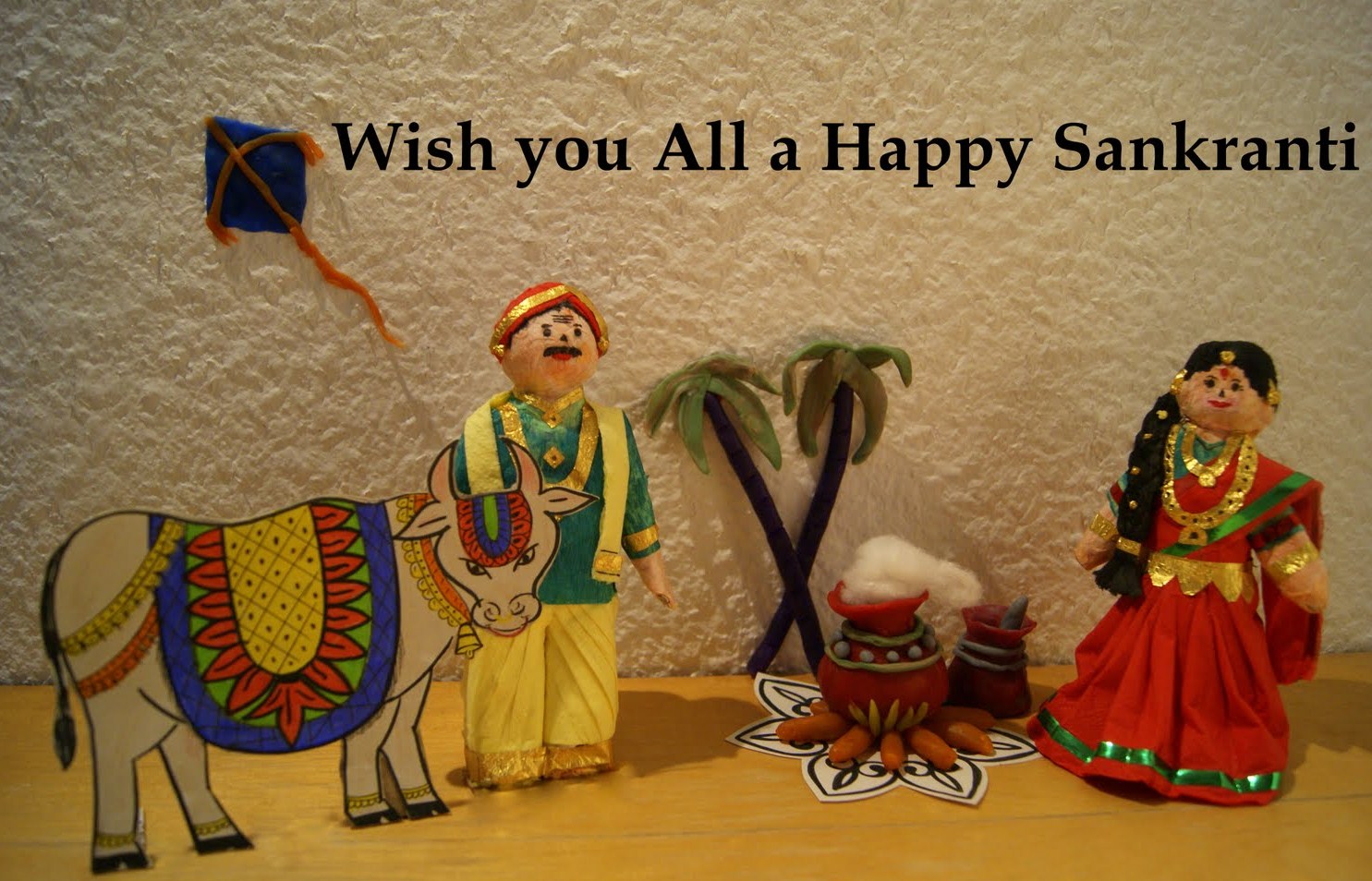
Makara Sankranthi


Makara Sankranti marks the transition of the sun into the zodiacal sign of Makara (Capricorn) on its celestial path, which is the first change in the zodiac after the winter solstice and is the first day of the month of Magha or Makara.

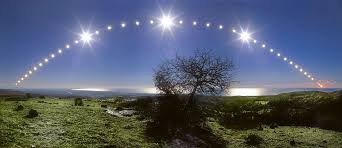
Makar Sankranti is celebrated as a very important festival in India. Sankranti literally means “movement.” Everything that we recognize as life is movement.The significance of the Makar Sankranti festival is that it marks the day where there is a significant movement in the zodiac – the arrangement of the earth’s dial around the sun – and this movement brings about a new change in the way we experience the planet itself. There are many sankrantis through the year; the two significant ones being Makar Sankranti, and right opposite, after summer solstice is Karkataka Sankranti. In between, there are many Sankrantis – every time the zodiac sign changes, it is called a Sankranti to suggest the movement of the planet, to understand that our life is sustained and nourished by this movement. If this movement ceases, everything about us will cease. On the 22nd of December, the winter solstice happened, that means in relation to the sun, the movement or the tilt of the planet reaches its maximum. Now, from this day onwards, the northern movement is strong. Things really start changing upon the earth.The Sun’s run in relation to planet Earth will shift from the southern run to the northern run – from Dakshinayana to Uttarayana.


What is happening in terms of celestial arrangement is that on the winter solstice on December 21, the sun was over the Tropic of Capricorn. From that day, if you watch the sunrise and the movement of the sun, slowly, every day it will shift to the north.

Capricorn is a sign of Saturn. On the day of Makar Sankranti, sun enters into the sign of Saturn.Sun God is considered the father of Saturn.Saturn and Sun,whose auspicious blessings can make humans achieve great success, are worshipped on this day.

Grace of uttarayana:

People who have been spiritually aware have always identified this transition as a possibility for human consciousness to blossom. Particularly, the first half of Uttarayan until the equinox in March is a period where the maximum amount of grace is available. The human system is more receptive to grace at that time than any other. History clearly indicates that the maximum number of people have attained in this phase of the sun in the Northern Hemisphere.

The religious scripture, “Gita” which is known as the voice of Lord Krishna, illustrates that six months of Uttarayan is the day time of deity.
And, the 6 months of Dakhshinayan is the night for Gods. It is believed that person who scarifies his body(dies) in Uttarayan get a position in ‘Krishna Lok’. That person gets liberation, whereas, the one who dies in Dakhshinayan, has to be reborn.

One of the most famous stories is of Bhishma waiting on his deathbed of arrows for many weeks. Though he was severely injured, he held onto his life until Uttarayan came because he wanted to make use of this transition in nature, to make his own transition possible. Gautama also attained on the third full moon day after Uttarayan. And in South India, there are examples of innumerable saints, sages, siddhas and yogis who have made the transition during this period.

The Harvest Festival:

The Makar Sankranti festival is also known and referred to as the harvest festival because this is the time when harvesting is complete and there are big celebrations.This is the day we acknowledge all those who assisted in making the harvest including The Sun and farm animals. Makara Sankranti is celebrated in many parts of South Asia with some regional variations. It is known by different names and celebrated with different customs in different parts of the region.In Tamil Nadu it is called Pongal. In Assam it is celebrated as Magh Bihu and Bhogal Bihu. In states of Punjab and Haryana it is celebrated as Lohri festival. In Uttar Pradesh it is celebrated as Khichdi or Donation festival. In Bihar it is known as Til Sankranti or Khichdi festival. In Kerala, the Makara Jyothi Dasrhan or Makara Vilakku at Lord Ayyappa Temple, Sabarimala attracts lakhs of devotees from all over India.

So Makar Sankranti is a festival to recognize the movement, movement being celebration, movement being life, movement being the process of life and the beginning and the end of life. Wishing you a radiant year ahead!

Monday, 5 December 2016

Thrikkarthika


The auspicious Thrikkarthika  Festival falls on December 12, 2016.


Thrikkarthika or  Karthikai Deepam Festival is a grand Festival of Lights. The festival is observed in most Hindu homes and every temple of Tamil Nadu and Kerala, and falls in the month of Vrishchikam. This occurs on the day when the moon is in conjunction with the constellation Karthika(Pleiades) and Pournami. This constellation appears as a group of six stars in the firmament in the shape of a pendant from the ear.

Keralites celebrate the festival of lights literally on 'Thrikkarthika day', rather than Deepavali. In the month of Vrichikam(Nov-Dec), Karthika day which mostly falls on the full moon day is celebrated as Thrikkarthika. As usual the celebration includes a feast with sweets, visiting nearby temples in morning and evening especially Devi Temples.  Some people believes it is a celebration for the  killing of  demon "Narakasura' but most of the people believes this day as the birth day of Goddess 'Karthyayani Devi'. 

Usually on Thrikkarthika day no crackers are lighted but the highlight is given for devotion. In Many parts of Kerala people do not even make a feast on this day but make rice soup(Kanji) with 'Karthika Puzhukku'(A vegetable preparation of a mixture of several underground stems ). In the evening each and every Hindu home is illuminated with small earthen oil lamps in the  lawn,on the walls, on the terrace, in the pooja room, on the steps and in each and every corner and it will be a beautiful sight. Almost all Devi Temples in Kerala will also be decorated with thousands of lighted small oil lamps. 


The lighting of the lamp is significant because in our visual experience, it is light which makes us see. It plays a significant role in our perception of the world around us. If there is no light, there is no experience of anything around us. Like Diwali, Thrikarthika’s message is also the same – victory of dharma. So, people are lighting traditional lamps known as ‘Chirad’ made of clay in their homes and temples at evening twilight. Actually children are more interested in lighting lamps than elders. Lamp is known as ‘Vilakk’ in both Malayalam and Tamil and hence lighting lamps on Karthika day of Vrischikam month is known as Karthika Vilakk.

Many legends and lyrical poetry have grown around Karthika star. The six stars are considered in Indian mythology as the six celestial nymphs who reared the six babies in the saravana pond which later were joined together to form the six faced Muruga. He is therefore called Karthikeya, and in Tamilnadu, this day is celebrated as Lord Muruga's birthday. As the six nymphs helped in growing the six child, lord shiva blessed immortality to the six nymphs as ever living stars on the sky. Any worship performed to this six stars is equal to worshiping lord Muruga himself. They are worshiped by lighting up rows of oil lamps (Deepam) in the evening of the festival day around the houses and streets.

The Thrikkarthika day is the main festival day of several Devi temples of Kerala. The most importance is given to the Devi at 'Kumaranallur' of Kottayam District. Some people even refer to this day as 'Kumaranallur Thrikkarthika'.

Kumaranalloor Devi Temple:


The Kumaranalloor temple is situated in the Perumbaikad village of Kottayam Taluk. Located around 5 kilometers away from Kottayam town, the Devi temple has an interesting legend behind. The temple was originally intended for Kumaran (God Subramanian) but was occupied by Devi telling Kumaran-alla-ooru means the place is not for Kumaran and thus came to be called Kumaranalloor.

The Kumaranalloor Thrikkarthika festival is celebrated here in the month of Vrishchikam (November - December). The ten day festival starts with the hosting of holy flag (Kodiyettam) on the first day. Special poojas are conducted from second day onwards. There will be 'Arattu' (holy bath) of the idol in the nearby Meenachil River. The ninth day or the day 'Karthika' is the most important one. It is very special for Devi and the resplendent "deepakazcha" at the temple in the evening is a divine experience.

Chakkulathukavu Devi Temple:

Sree Chakkulathukavu Devi Temple, dating back to about 3000 years, is located at 'Neerattupuram' on the border of Patthanamthitta  and Alappuzha Districts of Kerala. 
Here the Devi - goddess is in swayambhu - self- manifested in the shape of Lingam.Thrikkarthika Festival' (the birthday of the goddess) in the Malayalam month of 'Vrichikam' is well celebrated on a grand scale in this temple. On this important day, the major attractions are 'Laksha Deepam' ( 100,000 oil lamps are light on the temple premises) and 'Karthika Pillar. The former is symbolic of spread of wisdom, prosperity and goodwill and  the latter refers to an event in which  Aricanut tree, decorated with plantain, straw, dry leaves, etc., is set on fire, symbolizing eradication of evil thoughts, negative elements from our mind.

On Thrikkarthika Day the 'Pongala Festival'  here is performed by lots of women devotees who light up oil lamps at the temple and in their houses. Women folks prepare Pongala (in Tamil Pongal) by cooking rice with Jaggery (Naattu sakkarai or Vellam) and grated coconut in earthen pots set in the open places near the temple and offer it to the goddess. The make-shift hearth is made of bricks and one can see lines of Pongala pots on the paths leading to the temple.

Vadakkunnathan Temple:

On the Thrikkarthika day in Vrischikam(November-December) morning poojas for Vadakkunnatha are conducted at the Southern compound wall.It is believed that on this day Lord Vadakkunnatha will sit on the compound wall looking Southwards to see his consort's (Kumaranalloor Kathyayani Devi) return procession after the Thrikkarthika Aarattu in Meenachil river. Vilwamangalam Swamiyar once visited this temple in the morning on Thrikkarthika day. He realized the absence of Vadakkunnatha inside the Sreekovil. So he went around and found the Lord on the compound wall. It was Vilwamangalam who started the pooja on Southern compound wall on Thrikkarthika day.


Kadampuzha devi temple:

The Karthika day in Vrischigam is celebrated as Pradishta day in Temple with Sudhi, Navakom, Panchagavyam, special kalasams etc on the auspices of the Thanthri of the temple. The Poomoodal and all special poojas on this day are performed by Devaswom directly. Unlike other temples, the Karthika deepam lightings are done in the early hours in the morning. There will be large scale Prasada Ootu to the devotees in specially put up vast pandal in temple compound from 10.30 am onwards which may extend to the evening. The number of devotees who attend this religious feast may well cross 15000. There will be special poojas and vadhyams particularly in Sree Madambiyarkavu, a Kiratha Moorthy Temple situated 2 km away from here. Due to the ceremonial connections the Karthika day poojas in this Temple are offered by Kadampuzha Devaswom.
  

Sunday, 4 December 2016

Guruvayur Ekadashi Festival

This year the auspicious Guruvayur Ekadashi falls on 10th December 2016.


The Sree Krishna Temple at Guruvayur, unmistakably one of most sought after places of worship in Kerala, is all set to celebrate its most popular festival – Ekadasi . And the festive mood has already set in at every nook and corner of this temple town.

Ekadasi, the eleventh day of every lunar fortnight, is very auspicious to the Hindus. Of the 24 Ekadasis in an year, the Vrishchika Ekadasi (Suklapaksha) has got special significance in Guruvayur. It falls in the Mandala season. The Navami (9th day) and Dasami (10th day) are also very important.One of the most important rituals associated with Guruvayur Ekadashi, is the lighting of Ekadasi Vilakku (lamps). "Ekadasi Vilakku" starts a month before the Ekadasi day as offerings by different persons, families and organisations. On Navami day, the Vilakku is lit with ghee as an offering by Kolady family. The Dasami Vilakku which used to be an offering of Zamorin Raja, is now conducted by Guruvayurappan Sankeerthana Trust. After the temple is open on this day for Nirmalya darshan ( 3.00AM ), it is closed only at 9.00 am on Dwadasi Day (12th day), thus allowing continues darshan for devotees throughout Dasami and Ekadasi Days. Until the temple entry for all Hindus in 1947, Avarnas (lower caste) were allowed to come up to Thiyyarambalam on Dasami day (in between Manjulal and Eastern Gopuram). On Dwadasi day there is a custom of offering a token amount called Dwadasi Panam in Koothambalam for the welfare of the family.

A highlight of the Ekadasi is the memorial honour for Gajarajan Kesavan . The Karanavar or head of the elephant family places a wreath at the statue of Kesavan in front of Sreevalsam guest house and all the other elephants stand around and pay obeisance. On Ekadasi day, the Udayasthamana Pooja (continuous pooja) is conducted by the Devaswom itself . After the morning seeveli, on Ekadasi there is a grant elephant procession to the Parthasarathi temple since it is regarded as Geethopadesam Day also. On Ekadasi after night pooja the famous Ekadasi Vilakku with elephant procession takes place and provides a fitting finale to the festival.

Some of the most popular occasions of Sree Krishna temple at Guruvayur also take place during this time of the year. The Guruvayur Kesavan Memorial Day, Chembai Music Festival, Narayaneeya Day and Kalabhattam are just some of the occasions during which several hundreds of devotees reach Guruvayur town. However, the Guruvayur Ekadasi Vratham tops the chart of all festivities. Every year, the jubilance is felt not alone in and around the Sree Krishna temple but across Guruvayur town which gets drenched in celebrations during the festival. 

Importance of Guruvayur Ekadashi:


Guruvayur Ekadasi is also observed as the Prathishta Dinam (installation day) of the temple. Though the temple is known as Sri Krishna temple, the idol made of Pathalanjana Sila, installed at the Sreekovil (sanctum sanctorum), is of Lord Mahavishnu.It is believed that on this day the idol was installed. It is also on this day Lord Krishna preached the Srimad Bhagavad Gita, to Arjuna in the battlefield of Kurukshetra at Mahabharata Yudha (Mahabharata War) as per Malayalam calendar.

Another legend says that once when Lord Maha Vishnu visited the abode of Yama, he heard heart rending cries of people tortured for their sins. The Lord wanted to save them from more suffering and uttered the word Ekadasi. The very mention of the word removed all their sins. Observance of Ekadasi is believed to have a purifying effect. It is believed that the sins of a life time are washed away if one happens to see the Guruvayur Ekadasi Vilakku (festival of lights). Legend says that on Guruvayur Ekadasi, Lord Indra comes with Kamadhenu and gives all material wealth and offers worship to receive Sri Krishna's blessings. On that day all the theerthas such as Kasi, Badri, Sabarigiri and Palani in addition to rivers like Ganga and Jamuna assemble in this sacred place.

Ekadasi Fasting:

The preparation for Ekadashi fasting begins on the Dasami day – the day before Ekadasi. On the Ekadasi day, devotees observe complete fast. The day is meant for spiritual uplifting through meditation, chanting and satsangs. Guruvayoor Ekadasi is also called Mokshada Ekadasi, as its observance leads to one's moksha or liberation.

There are also devotees who do not observe total fast. They avoid grains especially rice and consume fruits, nuts and milk.
The fasting comes to an end on the Dwadashi day with the consuming of food cooked in one’s house.


To know more about Ekadashi rituals and the significance of vrata please visit the link: https://devaayanamblog.blogspot.in/2016/11/significance-of-ekadashi.html


Wednesday, 30 November 2016

Sree Pisharikavu Bhadrakali Temple, Kollam-Koyilandi, Kozhikkode District


Sree Kollam Pisharikkavu Bhagavathy Temple is a must visit temple in the North Malabar region of Kerala. Pisharikavu Temple is located at a pristine village near Kollam-Koyilandi in Kozhikode district. It is about 30 kms from Kozhikkode town and is situated on the NH-17. One can easily reach there by bus or train. The nearest railway station is Koyilandi.

It is believed that this temple was once situated in the Kollam region of Erstwhile Travancore district  and was shifted here by Bhagavathy's devotees when they had fled from their native place. Bhagavathy is worshipped as fierce Bhadrakaali here and the sword of Bhadrakali, known as "Nandhakam" is being offered with Pujas at the Sanctum Sanctorum. Here the main deity Bhadra is facing North, and there is a Shiva temple facing East. Sree Sastha is the  sub-deity of this temple. The huge temple pond here is called "Chira" and it is a visual treat to the devotees visiting here.

Legend:

Once, a clan of families from Pandya kingdom belonging to 'Vaisya' tribe came to the Kollam district in Travancore desam and settled there to expand their business in Gold and silk. The eldest of the family was an ardent devotee of "Sree Porkkali Bhagavathy" and he did penance for many years praying for Her blessings. Devi became pleased with his devotion and appeared in his sleep and offered her sword "Nandhakam" to the family as a symbol of Her blessings. He found the divine sword beside him when he woke up. he took it to Kollam and built a temple there for worshipping Bhagavathy and her divine sword. Since this devotee was also a famous "Visha haari" ie. one who cures some one from poison death, this temple came to be popular as "Visha hari kavu" and later to "Visharikkavu". 

By worshipping Bhagavathy the Vysya family grew their business very quickly with overseas trades and their wealth knew no bounds. Slowly they became very proud and egoistic and even challenged the King of Travancore. The angry King deported the eight families of Vysyas and they fled in boats along Arabian sea with their possessions and the "Nandhakam"sword given by Bhagavathy. They reached Koyilandi coast belonging to Kurumbanadu Raja and descended there to start anew.

They bought land for their settlements from the King and obtained permission to build a temple for Sree Bhadrakaali. They built a grand temple at Mannanmangalam village near Koyilandi and with respect to their old temple named it as "Kollam Visharikkavu" which later came to called as "KOllam Pisharikkavu". They placed the "nandhakam sword" in the sanctum along with Bhadrakaali idol. The eldest Vysya of the family did the pujas and offerings at the temple and the family prospered there.Devi was worshipped according to the "Kaula" rituals and meat and toddy were offered to her for the "naivedya'. Later a brahmin family was appointed as  the priests and these rituals were stopped. Then Bhagavathy's powers multiplied manyfold and it became impossible for devotees to enter the temple. Then the brahmin priests were stopped and "vattoli moossath" were bestowed with the duties and the earlier rituals were started again.


Offerings:

Valia vattala guruthi is the main offering and booked for several years. Udayasthama pooja, Niramala, Rakthapushpanjali, Palpayasom are a few of the other offerings. 

Festivals:

Kaliyattam:

Kodiyettam
This grand festival is celebrated annually in the malayalam month of "Meenam" and lasts eight days. The "kodiyettam" or festival flag hoisting is done on a long bamboo pole. On the first 6 days of festival the idol of Bhagavathy is taken out for procession and on the last two days the "Nandhakam" sword is taken out. On the seventh day is the "Valiya Vilakku Mahotsavam" and on the eighth day "Kaliyattam" is performed. An oracle or "velichappadu" holds the Sword during procession on a decorated female elephant. This festival attracts thousands of devotees from near and far. 

Traditional art forms of Kerala are staged in the temple during festival days. Thayambaka, pachavadyam, padhakom, ottanthullal, chakyarkoothu are also performed on these days. 

Navarathri festival is also celebrated in this temple in a grand manner.


Wednesday, 23 November 2016

Significance of Ekadashi


"Ekadashi" is a Sanskrit word, which means 'the eleventh'. It refers to the eleventh day of a fortnight belonging to a lunar month. There are two fortnights in a lunar month—the bright and the dark. So, Ekadashi occurs twice in a month, in the bright fortnight and the dark fortnight. The special feature of Ekadashi, as most people know it, is a fast, abstinence from diet. This is how it is usually understood. 'We do not eat on Ekadasi', is what people understand. In this country (India) it has become a routine to be abstemious, if not observe a complete fast on this day. The significance of this particular observance is not merely constituted of a fast, physically, though it is also an essential element; it has other deeper aspects. In fact, the fast is only a practical expression and a symbol of something else that we are expected to do, which is of special significance to our personality.

In the Mandala punyakala, three ekadashis come and out of these three, Thriprayar Ekadashi and Guruvayoor Ekadashi are observed with great reverence. But these days observation of Ekadashi confines to simply following certain rituals without understanding its significance. This blog tries to throw some light on how a conscious observation of Ekadashi Vrata helps to bring health and vibrance to the system and helps a person in his spiritual journey. 

Those who know astronomy as something which tells about the inter-relation of the planetary system, the stellar world, would be aware that we form a part of this planetary or solar system. Astronomy studies the movements of planets and stars, and astrology the effects they produce on the contents of the system. The Ekadasi observance is an astrological phenomenon and it is observed due to this relation we have with some of the planets in the system. The entire personality of ours is tremendously influenced by the movement of planets. There is no use imagining that the planets are above our heads. They are everywhere. There is a relative movement of planets among which the earth is one. Each planet tells upon our system and we cannot get rid of the influence of theirs as long as we are in this planet, of which we are a part. 

The sun is said to influence the centre of our personality; hence the sun is called 'Atmakaraka'. He is the soul-influencer of the human body. In the Rig-veda, the sun is identified with the soul of the universe as well as the soul of the individual. The different limbs of our body and different parts of our system are supposed to be influenced by different planets. The sun is capable of influencing the entire being. He is, thus, the Atmakaraka. Karaka is doer, manipulator, director.

The moon is supposed to influence the mind. The mind is also made up of material substance, very subtle, gathered through senses and memory. Ekadasi is particularly relevant to this relation of moon and mind. 

How, is Ekadasi related to the movement of moon and mind?

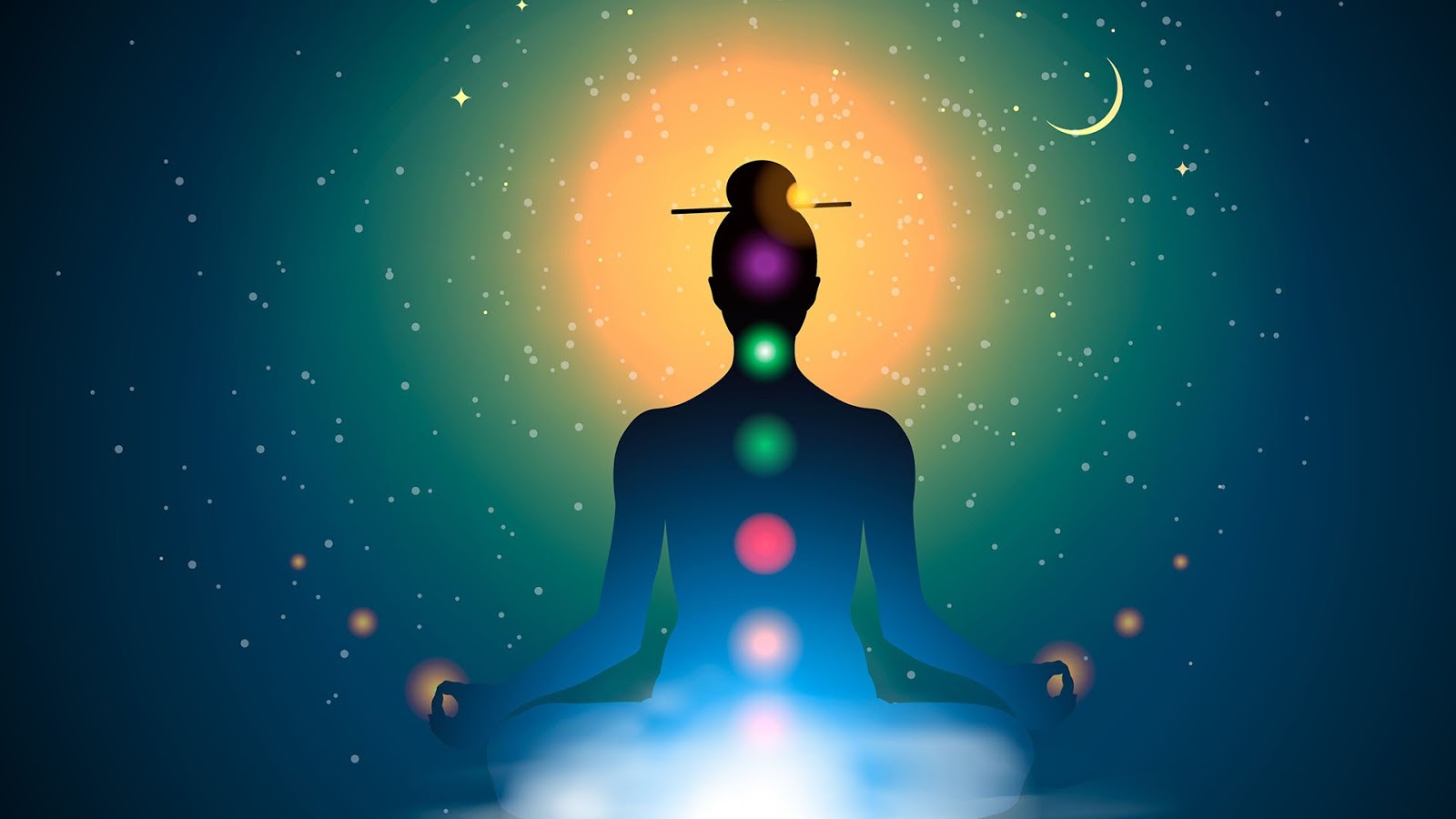
We have certain centres called 'Chakras' in the body. The Chakras are nothing but energy-centres which whirl in some direction as water whirls in a river. Chakra is a wheel or circular motion. They move in a spiral shape. They are not physical; but psycho-physical and psychological. These Chakras are neither in the mind nor in the body; they are in the astral body. The moon's influence physically on the body has an influence on the Chakras, which tells upon the mind ultimately. The mind moves through these Chakras. The passage of the mind is through these Chakras, up and down. When this operation takes place consciously, it is called Yoga; When done unconsciously by the mind, it is just influence. When the moon waxes or wanes, the mind is vehemently influenced. So people who are not normal in their minds become very affected on the full-moon and new-moon days. 

Another important aspect is the seat of the mind which is also twofold. The mind has several abodes or centres of energy called Chakras, of which two are its own. The seats of the mind in this personality of ours are:

1. the subtle spot in the astral body corresponding to the centre of the two eye-brows, in waking,called Ajna Chakra and 
2. the heart, in the state of deep sleep,called Anahata Chakra 

In both these centres, the mind feels at home and is at ease, because it is nearer to itself. In other centres it is extrovert. In the Ajna and the Anahata Chakras it finds itself at home. In the two fortnights, in its movement, it finds itself at the Ajna Chakra and the Anahata Chakra on the eleventh day ie. on Ekadashi day. Since these two Chakras are its own abode, the mind is at home here, i.e., it gets concentrated and collected easily. This has been the experience given out by our ancients, and this is taken advantage of by Sadhakas. You are capable of deep meditation when the mind is naturally in its home. So, the Ekadasi day in both fortnights is the occasion when the mind finds itself in its place—in the bright fortnight in the Ajna Chakra, and in dark fortnight in the Anahata Chakra. Seekers and Yogis take advantage of these two days and try to practise deep meditation. This helps sadhakas to elevate themselves in their spiritual seeking.

Fasting on Ekadashi:

The reason for fasting on Ekadashi is because the planet itself is in a certain state on that day, so if we keep our body light and available, our awareness will turn inward. The possibility of opening the door within is more on that day. If you have a full stomach, and you are unaware and dull, you will not notice it. So to stay alert and also to purify the body, you go without food on that day – you ate dinner the previous day and the next thing you eat is dinner on Ekadashi.


If you are unable to go without food –  because your activity levels are such and you do not have the sadhana to support you – you can go on 'phalahara' or fruit diet, which is light on the stomach so that your inner doors will open. Forceful denial of food is not the point. The point is to make everything into a conscious process.Fast is supposed to cause buoyancy of feeling and not fatigue. 

Apart from all these, there is a necessity to give the physiological system some rest once a while. It may be over-worked due to a little over-eating or indiscrimination in diet. These irregularities unconsciously done during the fourteen days get rectified in one day.  Thus the observance of Ekadasi has many advantages—physical, astral, spiritual—and because this day has connection with the relation of the mind with its abode together with the moon, you feel mysteriously helped in your meditation and contemplation,—mysteriously because you cannot know this outwardly,but you can feel this for yourself by observing it.